A Japanese Island Where Cats Outnumber Humans
 Collected Image
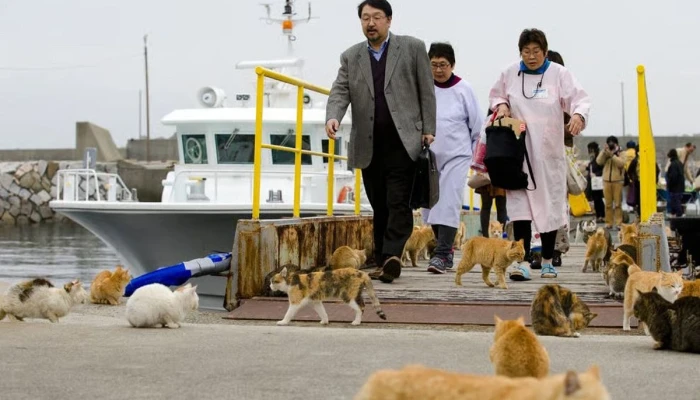
Aoshima, a small island in Japan popularly known as “Cat Island”, has become famous for its unusually large feline population, which outnumbers its human residents.
However, the island was not always dominated by cats.
Aoshima was once a fishing community where residents depended on fishing and the fish trade for their livelihoods. Shortly after World War II, around 900 people lived on the island.
As mice increasingly became a nuisance on fishing boats and among fishing nets, cats were brought to the island to control the rodent population. Over time, the animals became an integral part of island life. With sufficient food and a favourable environment, their numbers gradually increased.
Meanwhile, the lives of the island's human residents began to change. Faced with limited livelihood opportunities and seeking better prospects, many people moved to mainland Japan. As the human population declined, the cats remained. Eventually, they came to outnumber the people living on the island.
Aoshima's transformation reflects a broader demographic challenge facing rural Japan. In many remote areas, young people are leaving their hometowns for cities in search of jobs and educational opportunities. As a result, small islands and rural communities are experiencing population decline and a growing proportion of elderly residents.
Photographs of Aoshima's cats gradually spread through news outlets and social media, bringing the island to the attention of a wider audience.
The island subsequently emerged as an unusual tourist attraction, drawing visitors from across Japan and abroad. Its quiet, secluded setting and freely roaming cats have become its defining features.
The cats can often be seen gathering near the harbour, sitting in front of houses or resting in groups along narrow pathways. Some approach visitors out of curiosity, while others continue wandering around without paying much attention to the people nearby.
Efforts to control the cat population
The growing cat population has also raised concerns about animal health and welfare, making their care an increasingly important issue for the island's remaining residents.
In 2018, a large-scale sterilisation programme was launched to control the population. The initiative helped prevent further births, gradually reducing the number of cats on the island.
Aoshima, which once had around 200 cats, is now home to an estimated 80. Many of the surviving animals are elderly.
The responsibility for caring for the remaining cats rests largely with local residents. Among them is Naoko Kamimoto, who, despite her advancing age, continues to look after the animals with her husband. They provide food for the cats and arrange medication for those that fall ill.
Today, Aoshima remains a striking example of how changes in human settlement patterns can transform a community—and how an unexpected population shift can turn a once-ordinary fishing island into a destination known around the world for its cats.

 Collected Image